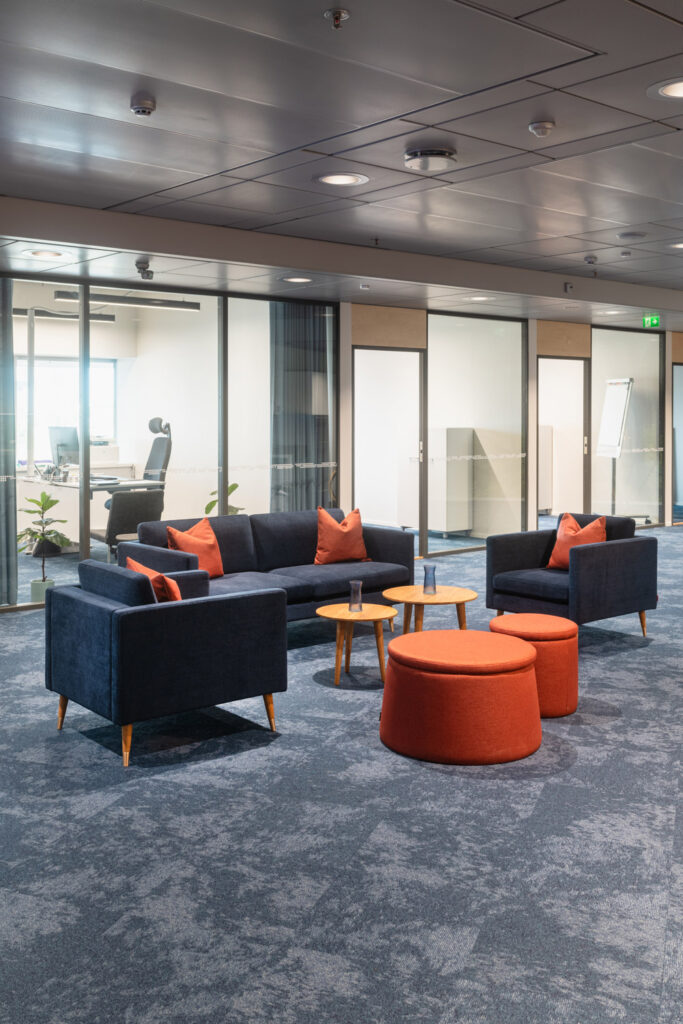
One of the most important elements of restaurant interior design is the flooring. It not only creates the first impression of the space but also significantly affects the acoustics and atmosphere of the area. Textile tiles offer versatile solutions for restaurant spaces, combining functionality, aesthetics, and acoustic properties. Restaurants are acoustically challenging environments where textile tiles can be used to create more pleasant dining experiences. Explore our expert flooring solutions and find the right option for your restaurant.
1: The Soundscape of Restaurant Interior Design and Its Significance
The soundscape of a restaurant directly affects the customer experience. High noise levels can disrupt conversation and diminish dining enjoyment, which directly impacts customer satisfaction.
Acoustics are a particularly important factor in fine dining restaurants, where conversation is an essential part of the dining experience. On the other hand, in busy bars and casual restaurants, an appropriate soundscape creates an energetic atmosphere, but excessive reverberation makes the space unpleasant.
Textile tiles function as an effective acoustic element in restaurant spaces. They absorb sound, reduce echo, and improve speech intelligibility. This enhances the comfort and well-being of both customers and staff. High-quality textile tiles can reduce the noise level of a space by as much as 20-30 decibels, making the dining experience significantly more pleasant.
2: Richly Colored Textile Tiles as Atmosphere Creators
The color scheme of a restaurant significantly affects customers’ moods and even their appetite. Textile tiles offer the opportunity to create personalized and impactful interior design solutions that support the restaurant’s concept and brand identity.
The wide color range of Bloq textile tiles enables versatile interior design. Deliciously vibrant options suit energetic and youthful restaurants, while calmer, nature-inspired tones create an elegant atmosphere in fine dining environments. The Finnish color palette, which draws from nature—the green of forests, the blue of lakes, and autumn’s russet hues—is particularly popular in domestic restaurants.
Colors also have psychological effects: red and orange tones stimulate appetite and suit fast-paced restaurant interiors. Blue and green tones, on the other hand, have a calming effect and suit restaurants focused on longer dining experiences. The color design of textile tiles should therefore be done carefully, taking into account the restaurant’s concept and desired atmosphere. Explore Bloq textile tiles’ inspiring color range and find the right shades for your restaurant’s look.
3: Textile Tiles as Space Dividers
Modern restaurant design emphasizes the adaptability of spaces and the creation of different atmospheric areas. Modular textile tiles offer a flexible way to divide a restaurant into different functional areas without fixed structures.
In addition to traditional square tiles, innovative shapes are available, such as hexagonal Hexagon tiles and trapezoid designs. These can be used to create dynamic patterns and clear boundaries, for example, between the bar, dining area, and waiting area. The combination of different shapes and colors enables creative flooring solutions that guide customer flow and create visual interest.
Finnish interior design currently shows a strong trend of combining geometric patterns and nature-inspired elements. Textile tiles support this trend by offering the opportunity to create, for example, combinations of wood flooring and textile tiles or transitions from one material to another. This brings both warmth and acoustic comfort to the restaurant.
4: Acoustic Solutions for Noisy Restaurant Environments
Restaurants are acoustically challenging spaces where hard surfaces such as glass, concrete, and metal reflect sound and increase noise levels. Bloq textile tiles offer an effective solution to this problem with their excellent sound-dampening properties.
The most common acoustic challenges in restaurants are the clinking of dishes, background music, kitchen sounds, and customer conversation, which together can raise the noise level to an unpleasantly high level. Textile tiles effectively absorb these sounds and reduce reverberation time, making the space acoustically more pleasant.
The technical properties of Bloq textile tiles make them an excellent choice for restaurant environments. Their thick structure and porous material effectively dampen sound, and they are excellently suited to various restaurant environments—from quiet fine dining restaurants to busy bistros. Explore Bloq textile tiles’ acoustic properties and improve your restaurant’s soundscape.
5: Durable Textile Tiles for the Busiest Areas of Your Restaurant
Restaurant floors are put to the test. Particularly entrances, walkways, and areas in front of the bar counter are exposed to constant wear, moisture, and stains. These areas require particularly durable flooring solutions that maintain their stylish appearance even in demanding conditions.
Bloq textile tiles are designed to withstand heavy use. Their wear resistance is excellent, and they maintain their appearance and properties for a long time even in busy restaurant environments. The modular structure of textile tiles also offers a practical advantage: individual tiles can be replaced as needed without renewing the entire floor.
The technical properties of textile tiles also include excellent moisture resistance and easy cleanability, which is particularly important in restaurant environments. Durable textile tiles are a long-lasting investment that saves costs and maintenance effort in the long run.
6: Environmentally Friendly Textile Tile Choices
Sustainability is an increasingly important value in restaurant operations, and it is reflected in interior design choices as well. Environmentally friendly material choices strengthen the restaurant’s responsible image and respond to consumers’ growing expectations for sustainable business practices.
Bloq textile tiles represent modern environmental thinking. They use responsible Aquafill yarn, and up to 70% of the tile backing is recycled material. The innovative powder coating technique developed by Betap makes the mats fully recyclable and has reduced the carbon footprint by a significant 80% compared to traditional methods.
Environmentally friendly textile tiles are a concrete demonstration of the restaurant’s commitment to sustainable development. They offer an opportunity to communicate the restaurant’s values to customers while making a responsible choice that lasts over time both aesthetically and functionally. Explore responsible Bloq textile tile solutions and make an environmentally conscious choice for your restaurant.
Comprehensive Interior Design Solution for Your Restaurant’s Needs
Textile tiles are a versatile solution that meets the special requirements of restaurant spaces in terms of acoustics, durability, and aesthetics. A successful flooring solution supports the restaurant’s concept and brand and creates a comfortable environment where customers want to stay longer.
Finnish design is strongly visible in modern restaurant interiors, and domestic textile tile solutions offer an opportunity to support this trend. Through careful combination of colors, shapes, and materials, unique spaces can be created that stand out from competitors and remain in customers’ memories.
We at VMC Project help you find the right textile tile solution for your restaurant that combines functionality, aesthetics, and sustainability. Our experts provide support throughout the entire project from design to installation. Contact us and tell us about your restaurant’s needs—let’s design together a suitable, durable, and stylish flooring solution for your space.