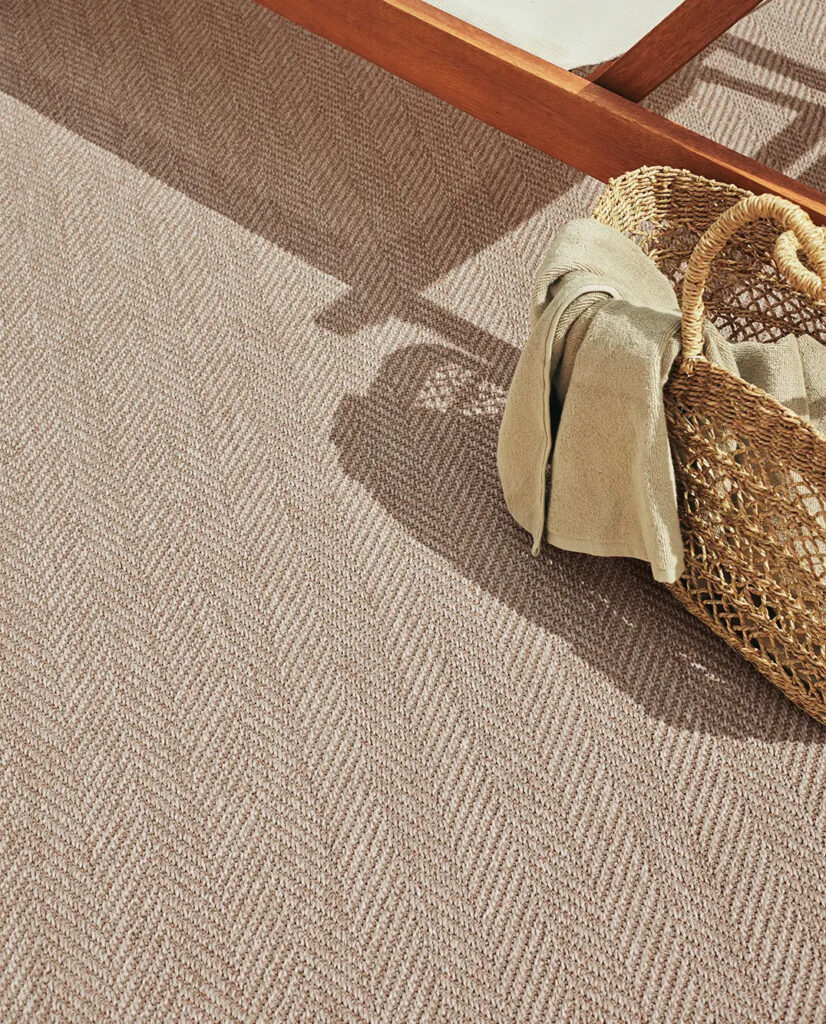
The customer experience begins before a single word is spoken. The floor is one of the first things a person unconsciously registers upon entering a business space, and it instantly communicates quality, care, and brand identity. In this article, we walk through all the essential questions to help you choose the right flooring solution for your business.
How does flooring affect first impressions in a business space?
Flooring has a direct impact on first impressions because it is one of the largest surfaces in any space and one of the first elements the brain processes upon entry. A well-chosen carpet or flooring solution communicates quality and attention to detail before anyone has said a word. A poor or worn floor, on the other hand, lowers the perceived standard of the entire space.
In the entrance area, the role of flooring is especially significant. It is the point at which a customer forms their first impression of a business. In an office, restaurant, or hotel, the floor sets the tone — either reinforcing or undermining the message conveyed by the rest of the interior. Carpet softens sound, adds warmth, and makes a space more inviting. A hard, cold floor can feel unwelcoming, even when the rest of the décor is carefully considered.
Acoustics are another concrete factor. Carpet absorbs footstep noise and background sound, making the space more pleasant for both customers and staff. This is particularly important in open-plan offices, restaurants, and hotel lobbies, where the acoustic environment directly affects comfort.
What flooring materials are recommended for high-traffic public spaces?
For public spaces, the best options include carpet tiles and broadloom carpets made from polyamide, wool, or recycled fibers, as well as textile vinyl — all of which can withstand heavy daily use. The choice of material depends on the intended use, traffic level, fire safety requirements, and ease of maintenance.
Carpet tiles
Carpet tiles are a popular choice for offices and public spaces because individual tiles can be replaced when worn. For example, Modulyss carpet tiles are made from 100% recycled Econyl yarn, carry a 15-year warranty, and hold Cradle to Cradle certification. Belgian brand BLOQ uses Aquafill yarn and incorporates recycled material in the backing, according to the manufacturer.
Textile vinyl
Textile vinyl is particularly well suited to spaces that require both the ambiance of carpet and the durability of a hard surface. Ntgrate textile vinyl is an excellent choice for corridors, lobbies, and even wet areas. According to the manufacturer, its Greenfelt felt backing is made from recycled material and provides a minimum sound reduction of 19 dB.
Broadloom carpets and rugs
Broadloom carpets and area rugs are ideal for spaces where a cohesive, warm atmosphere is desired. Common materials include wool, polyamide, sisal, and recycled yarn. All Infloor products carry M1 certification, and their self-adhesive LiftBAC backing makes installation and replacement straightforward.
Can flooring become part of a company’s brand identity?
Yes, flooring can absolutely become a clear part of a company’s visual identity. Using print technology, a company’s logo, color palette, or a fully custom pattern can be applied directly to the carpet surface. This allows brand identity to extend all the way to the floor, creating a cohesive and professional environment.
At VMC Project, we supply printed carpet material based on a designer’s own artwork. This approach is especially well suited to entrances, meeting rooms, and representative spaces where brand visibility matters. A printed carpet can feature a company logo, a geometric pattern, or a completely bespoke design — and it is manufactured to withstand heavy use.
Color and pattern choices can also reinforce brand identity without printing. Modulyss’s extensive range of colors and patterns, or BLOQ’s bold color combinations, make it possible to create a flooring solution that supports a company’s visual direction. A customized floor is no longer a luxury — it is a practical way to stand out.
How do you choose the right flooring solution for different business spaces?
The right flooring solution is chosen based on the intended use of the space, traffic levels, acoustic requirements, and visual identity. An office calls for a different solution than a restaurant or hotel corridor, and these decisions are best made in consultation with an expert.
- Office: Carpet tiles or broadloom carpets that absorb sound in open-plan environments. Easy maintenance and the ability to replace individual tiles extend the product’s lifespan.
- Restaurant: A hard-wearing carpet that is easy to maintain and meets fire safety standards. Atmosphere and acoustics are especially important in a restaurant setting.
- Hotel: Corridors benefit from durable broadloom or carpet tiles. Guest rooms can feature softer, more luxurious materials such as wool or high-quality tufted carpet.
- Entrance and lobby: Dirt-trapping mats and coir brush mats for practicality, followed by a quality carpet that continues the atmosphere of the space.
- Retail space: An easy-to-maintain, hard-wearing surface that complements the store’s visual identity.
The level of foot traffic directly influences material selection. In high-traffic areas, polyamide or textile vinyl is recommended, while natural fibers such as wool or sisal may be suitable for lower-traffic spaces. Browse our references to see how different flooring solutions have been implemented in practice.
What do environmental certifications mean for carpet flooring?
Environmental certifications mean that a product has passed an independent assessment of material safety, emissions, or production practices. The most common certifications for carpet flooring are the M1 emissions classification, Cradle to Cradle, BREEAM, and LEED — each measuring different and specific aspects of a product or building.
- M1 emissions classification is a Finnish classification system for building materials. An M1-rated product has low emissions and is suitable for spaces with strict indoor air quality requirements, such as schools, hospitals, and offices.
- Cradle to Cradle evaluates a product against criteria covering material health, material reutilization, renewable energy and carbon management, water stewardship, and social fairness. Modulyss carpet tiles hold this certification.
- BREEAM and LEED are international green building certification systems. Flooring materials that contribute points toward these schemes support the overall environmental certification of a building.
Certifications can also be practically useful from a corporate sustainability reporting perspective. When a flooring solution carries a recognized certification, it can support a company’s documentation of material choices and simplify communication with stakeholders. We have considered certification criteria when curating our range, and many of our products carry M1 certification.
Who is responsible for carpet installation and project coordination?
At VMC Project, we manage the entire project from planning through to installation. Our in-house installation service handles all carpet fitting, and our extensive network of specialists covers even the most demanding projects across Finland, on schedule.
The process is straightforward: we assist with material selection, tailor the solution to the needs of the space, handle cutting and edging in our own finishing workshop, and ensure the quality of the installation. Our computer-controlled cutting machines allow for precise measurements and custom shapes, and our skilled seamstresses deliver an impeccable finish.
Technical support is a core part of our service. We provide training both in person and via video calls, so you have access to the support you need even after project completion — whether for maintenance or care of the materials. We hold Reliable Partner and Finland’s Strongest Platinum certifications, reflecting our long-term commitment and responsible business practices.
Nothing replaces a real material sample when making flooring decisions. Order a material sample and see the true color and feel the texture in your hands before committing. If your project is already taking shape or you would like to explore your options, get in touch and we will get started together.