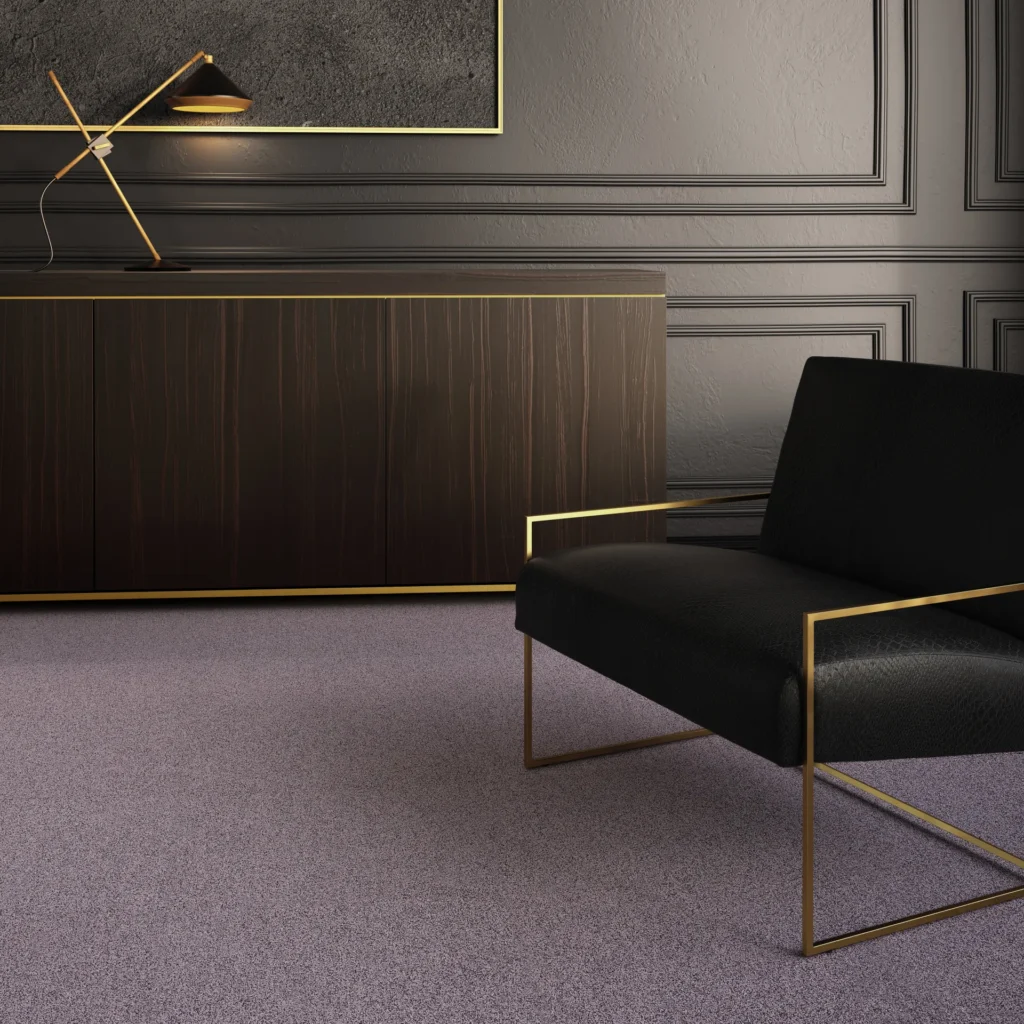
A high-quality carpet solution saves on maintenance costs because it withstands wear longer, is easier to keep clean, and needs replacing less frequently. In public spaces, floors are subjected to intense daily stress, and the right heavy-duty flooring material pays for itself within just a few years. Below, we cover the most important questions to help businesses make a smart choice.
Why do cheap carpets cost more in the long run?
A cheap carpet solution looks affordable at the point of purchase, but in a public space it wears out quickly, picks up dirt more easily, and needs replacing more often. The total cost includes not just the purchase price, but also cleaning expenses, installation fees, and the cost of closing the space during renovation. A high-quality carpet solution is clearly more economical overall.
In public spaces such as offices, restaurants, and hotels, floors absorb an enormous number of footsteps every day. Low-quality materials quickly lose their appearance and structural integrity, which in practice means the carpet needs to be replaced within just a few years of purchase.
- More frequent installations significantly increase labor costs.
- Poor stain resistance increases cleaning frequency and the cost of cleaning products.
- Rapid wear degrades the overall appearance of the space and negatively affects the customer experience.
- Material waste increases when the carpet cannot withstand cutting or modifications cleanly.
High-quality commercial textile carpets are designed to withstand exactly this kind of stress. They use materials such as polyamide, wool, and sisal, which retain their structure and appearance far longer than standard grades. When a carpet stays in good condition for several years, the investment is spread over a longer period and the true cost per year drops significantly.
What properties does a durable commercial carpet solution need?
A durable commercial carpet solution needs, above all, a high wear rating, fire safety compliance, and easy maintenance. In addition, the material must suit the intended use of the space and meet any applicable indoor air quality requirements, such as the M1 emissions classification.
The technical properties that make the difference
- Wear rating: A carpet suitable for commercial use carries a clear classification for heavy use. This means a dense fiber structure that does not pill or flatten quickly.
- Fire safety: Fire safety requirements in public spaces are strict. The material must comply with current building regulations.
- M1 emissions classification: Good indoor air quality is especially important in offices and learning environments. An M1-classified carpet does not release harmful compounds into the indoor air.
- Easy maintenance: A dense fiber surface that does not allow dirt to penetrate deeply makes daily cleaning easier.
- Acoustic properties: Textile carpet absorbs footstep noise and ambient sound, improving comfort in the workplace.
Material options for different needs
Polyamide is one of the most popular materials for high-traffic applications: it is resilient, wear-resistant, and takes dye evenly. Wool suits prestigious spaces where the warmth and feel of a natural material are desired. Textile vinyls, on the other hand, are ideal for spaces where moisture resistance is important, such as restaurant corridors.
For example, Ntgrate’s textile vinyls offer an excellent solution for wet or heavily trafficked spaces, with sound absorption of at least 19 dB and an M1 certificate.
How does the right carpet solution reduce cleaning and maintenance costs?
The right carpet solution reduces cleaning and maintenance costs because a high-quality surface repels dirt more effectively, withstands wet cleaning better, and maintains its appearance without special treatments. In practice, this means fewer cleaning sessions and lower costs for cleaning products.
Carpet tiles are a particularly practical solution from a maintenance perspective. If an individual tile wears out or becomes damaged, it can be replaced without replacing the entire floor. This significantly reduces both material and labor costs compared to a wall-to-wall carpet solution, which must be replaced in full when damage occurs.
- A dense fiber surface prevents dirt from penetrating deeper into the material.
- Correct placement guides foot traffic and protects the most heavily used areas.
- Entrance mats at entryways reduce the amount of dirt tracked in from outside into other areas.
- Carpet tiles allow partial replacement without replacing the entire floor.
The choice of material also directly affects cleaning requirements. For example, Infloor’s carpet tiles are odorless and non-allergenic, and their LiftBAC backing allows installation and removal without damaging the subfloor. All Infloor products carry the M1 certificate, which relates to their indoor air emissions performance.
Is a printed or custom carpet solution right for businesses?
A printed or custom carpet solution is an excellent choice for businesses that want to reinforce their brand identity, create a cohesive look, or stand out in customer-facing spaces. A custom carpet can incorporate a company’s logo, color palette, or a completely original design, while still serving as a practical floor surface.
At VMC Project, we supply printed carpet materials featuring a designer’s or company’s own design for public spaces such as offices, restaurants, and hotels. The latest printing technology enables accurate color reproduction and a durable result that does not fade under normal use.
A custom carpet solution is particularly well suited to:
- Businesses with a strong visual brand identity.
- Hotel lobbies and corridors, where first impressions matter.
- Restaurants that want to reinforce their atmosphere and concept through flooring.
- Offices where the floor is part of the interior design plan, not just a functional surface.
Customization does not mean compromising on durability. Printed carpet material is a heavy-duty surface that meets the same requirements as any other commercial carpet solution. Our skilled in-house seamstresses and computer-controlled cutting machines ensure every project is finished with care.
When should a business replace its office carpet?
An office carpet should be replaced when it is visibly worn, has lost its color, starts retaining odors, or when the use of the space changes. The appearance of the surface directly affects the overall impression of the space and the customer experience, so replacing a worn carpet is also a matter of image.
Clear signs that replacement is due:
- The carpet has flattened and does not spring back to its original form after cleaning.
- Distinct traffic paths or faded areas have formed on the surface.
- Cleaning is no longer sufficient to keep the carpet looking presentable.
- The carpet retains odors that cannot be removed with regular cleaning.
- The space is being renovated or its purpose is changing.
Replacement is best done proactively, rather than waiting until the carpet is completely worn out. Proactive replacement allows for careful planning, material comparison, and scheduling of installation in a way that does not disrupt operations. When replacement is done right the first time and a high-quality wall-to-wall office carpet or carpet tiles are chosen, the next replacement is pushed considerably further into the future.
Would you like to see and feel the materials before making a decision? Order a material sample from us — nothing replaces the real thing. You will see the true color and feel the material in your hands. We will send you the sample of your choice to examine and touch.
You are also welcome to browse our references and see what kind of carpet solutions we have delivered to spaces of all sizes and types. If you have a project in mind or want to explore your options, contact our specialists. We will help you find a durable, cost-effective solution perfectly suited to your space.