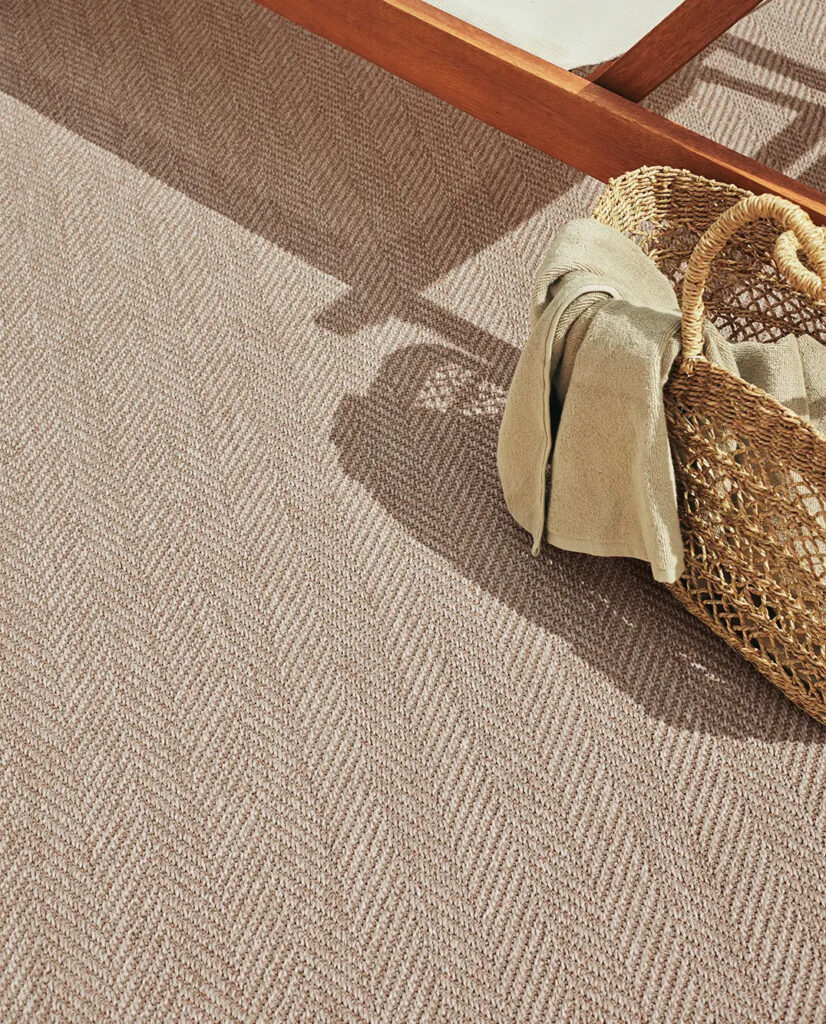
Flooring materials significantly influence the atmosphere of an open-plan office: they shape the acoustics, visual appearance, and comfort of the space all at once. Textile carpets and carpet tiles are particularly effective in open-plan offices because they absorb sound, soften the space, and withstand heavy use. Below, we walk through the most important questions involved in choosing a flooring material.
How does flooring affect the acoustics of an open-plan office?
The floor is the single largest surface in an open-plan office, and the choice of material directly affects how sound behaves in the space. Textile surfaces — such as wall-to-wall carpets and carpet tiles — absorb sound and significantly reduce noise from footsteps, chairs, and conversation compared to hard floor surfaces. This makes working more comfortable and reduces noise-related disruptions.
Acoustics are an ongoing challenge in open-plan offices: a hard floor reflects sound back into the space, increasing background noise and making it harder to concentrate. A textile carpet serves as the first line of defense, even if it cannot solve all acoustic issues on its own.
Carpet tiles vs. wall-to-wall carpet for acoustics
Both options work well, but they differ in important ways. Wall-to-wall carpet covers the entire surface seamlessly, providing consistent acoustic dampening throughout. Carpet tiles offer greater flexibility: they can be placed where noise is the biggest problem, and individual worn tiles are easy to replace.
Acoustic properties of textile vinyl
When a space requires both easy maintenance and acoustic performance, textile vinyl is a strong option. For example, Ntgrate’s textile vinyl flooring features a Greenfelt felt backing made from recycled materials, providing sound reduction of at least 19 decibels. This makes it a practical solution for corridors and lobby areas in open-plan offices.
What flooring materials are best suited for an open-plan office?
Textile carpets, carpet tiles, and textile vinyl made from heavy-duty materials — such as polyamide, wool, or recycled fibers — are the best choices for open-plan offices. The key selection criteria are durability, ease of maintenance, fire safety, and acoustic performance.
In an open-plan office, floors wear unevenly: corridors, meeting areas, and coffee stations experience much heavier traffic than quieter workstation zones. This is worth factoring in from the very start of the material selection process.
- Carpet tiles are a flexible choice, as worn sections can be replaced without having to redo the entire floor.
- Wall-to-wall carpet creates a cohesive, clean look throughout the entire space.
- Textile vinyl is well suited to areas where both easy maintenance and acoustic performance are needed.
- Polyamide is a common and reliable fiber for commercial spaces: it withstands heavy use, is easy to clean, and retains its appearance over time.
- Wool brings warm tones to a space and is naturally fire-resistant.
For example, Modulyss carpet tiles are made from 100% Econyl recycled yarn and come with a 15-year warranty, making them a long-lasting investment for office spaces. BLOQ carpet tiles are produced with 70% recycled material in their backing.
How do the color and pattern of flooring affect the feel of a space?
The color and pattern of flooring have a clear impact on the visual appearance and sense of space in an open-plan office. Lighter, neutral tones make a space feel open and bright, while darker or bolder colors add depth and help define different functional zones.
In an open-plan office, floor color can also guide movement and create zones without the need for walls. This is especially useful in large open spaces where different functions — such as meeting areas, workstations, and break areas — need to be visually distinguished from one another.
Solid colors vs. patterned carpets
Solid-color carpets create a calm, unified base that works well in spaces where other interior elements are more prominent. Patterned surfaces, on the other hand, add visual interest and tend to conceal wear and dirt better than flat, uniform colors. A textured surface is a practical choice, particularly for high-traffic areas.
Color zoning as a functional solution
Carpet tiles in different colors or patterns make it possible to create distinct zones without any construction work. This is a cost-effective way to separate, for example, a meeting area from an open workstation space. The range of options is broad, from classic solid colors to multi-toned, richly textured alternatives.
Can flooring reinforce a company’s brand identity?
Flooring can clearly reinforce a company’s brand identity: custom-printed carpets featuring the company’s own patterns, logos, or color palette make a space instantly recognizable and cohesive. This is an effective way to bring the brand to life in client-facing areas, lobbies, and meeting rooms.
At VMC Project, we use the latest printing technology to deliver custom-printed carpet material based on a designer’s or company’s own artwork. The result is a hard-wearing surface that looks great even years down the line.
Branded carpets are not the only way to stand out. Carpet tiles or wall-to-wall carpets tailored to a company’s color scheme also communicate a professional and considered approach to interior design. When the flooring aligns with the overall visual identity, the space feels cohesive and deliberate in the eyes of any visitor.
Want to see and feel how different materials look in practice? Order a material sample and evaluate the color and texture in real light before making your decision.
What environmental and safety requirements apply to office flooring?
Office flooring is subject to a number of environmental and safety requirements: materials must meet fire safety standards, and in public spaces, products with the M1 emission classification for building materials are recommended. The M1 classification means that a material is virtually emission-free and does not compromise indoor air quality.
Office spaces are classified as public spaces, which means that suitable floor coverings must meet stricter requirements than products intended for residential use. The most important considerations are:
- Fire safety classification: Materials selected for public spaces must carry the appropriate fire safety rating. Both polyamide and wool are strong choices in this regard.
- M1 emission classification: Many products in our range hold M1 certification, indicating low indoor air emissions.
- Vapor permeability: Flooring materials must also be technically compatible with the subfloor. Good vapor permeability, for instance, is important when used with underfloor heating.
- Environmental certifications: The BREEAM and LEED rating systems take the environmental impact of floor coverings into account as part of a building’s overall assessment.
The use of recycled materials in flooring products is one factor that companies may consider when evaluating procurement decisions alongside their environmental goals. Our range includes products that incorporate recycled fibers. For specific material composition details, we recommend reviewing the product documentation or contacting our specialists directly.
Browse our project references to see how we have delivered demanding office projects across Finland. If you would like to discuss the needs of your own project, get in touch with our specialists, who will help you find the right solution to suit your space, budget, and requirements.