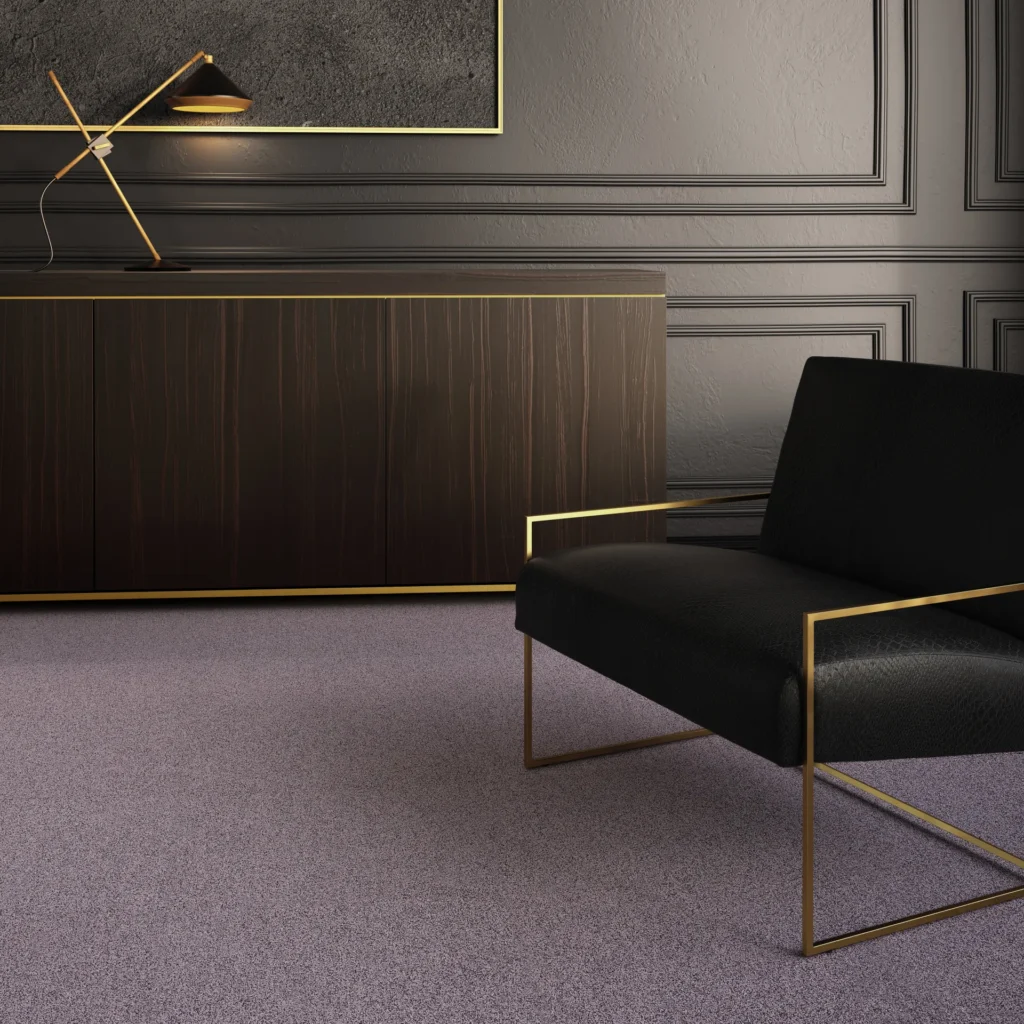
Flooring material affects the user experience of a space in many ways: it determines how a room sounds, looks, and feels underfoot, as well as how safe and easy to maintain it is. In public and commercial spaces, floor covering is one of the surface materials most present in users’ daily lives, which is why the choice deserves careful consideration. Below, we walk through the most important questions to help you find the right flooring material for your specific space.
How does flooring material affect the acoustic environment of a space?
Flooring material directly influences how much sound is reflected, absorbed, or transmitted within a space. Textile surfaces, such as wall-to-wall carpets and carpet tiles, significantly reduce footstep noise and echo compared to hard floor surfaces. This makes textile carpet solutions one of the most effective tools for acoustic control in offices, restaurants, and hotels.
The acoustic environment directly affects whether users feel comfortable and are able to concentrate. In an open-plan office, a reverberant floor increases noise levels, which reduces productivity and raises stress. In a restaurant, excessive echo makes the customer experience unpleasant — even when the food and service are excellent.
Acoustic properties of carpet tiles
The backing structure of carpet tiles significantly affects their sound absorption capacity. For example, Ntgrate’s textile vinyl tiles reduce sound by at least 19 decibels, and up to 22 decibels on special order. This makes them a practical choice for spaces where both acoustics and ease of maintenance are important, such as corridors, lobbies, and restaurants.
Wall-to-wall carpets and soft textile surfaces
Thicker wall-to-wall carpets and area rugs absorb sound effectively even in high-traffic spaces. Wool and polyamide are materials that combine a soft feel with excellent sound absorption. In hotel lobbies and meeting rooms, this combination significantly enhances the user experience without the need for separate acoustic panel solutions.
What does the choice of flooring material mean for the visual appearance of a space?
The floor is the largest continuous surface element in a space, and its color, pattern, and texture largely define the overall atmosphere of the room. The right flooring material supports brand identity, creates visual rhythm, and guides the eye and circulation paths through the space. The wrong choice, on the other hand, can make a space feel cluttered or visually flatter than intended.
Textile surfaces offer an exceptionally wide range of possibilities: from solid-color classics to multi-toned, richly textured options. Carpet tiles also allow patterns to be built from multiple shades or directions, giving interior designers creative freedom that roll materials simply cannot provide.
For businesses, the floor is also a brand statement. A printed carpet featuring a company’s own design or color palette tells visitors what kind of organization operates in the space. At VMC Project, we supply printed carpet materials based on the designer’s own artwork for offices, restaurants, and hotels.
Why does flooring material choice affect the safety of a space?
The choice of flooring material affects safety in three ways: slip resistance, fire safety, and indoor air quality. In public spaces, these are not merely matters of comfort — they are often obligations set by regulations and certification requirements.
- Slip resistance: Textile surfaces naturally provide better grip than glossy hard floors. VM Carpet rugs feature a non-slip EVAPOLYTEX backing, which enhances safety particularly in high-traffic areas.
- Fire safety: The materials we supply for public spaces meet fire safety standards. Many products carry clear fire safety classifications, which should be verified on a project-by-project basis.
- Indoor air quality: The M1 emission classification means that the material does not release harmful compounds into the indoor air. Many products in our range carry this classification, which is especially important in offices, schools, and care environments.
Safety considerations should be addressed during the planning phase, as replacing materials after installation is always more costly than making the right choice from the start.
How does flooring choice affect the maintenance and lifespan of a space?
Flooring material directly determines how much time and money the upkeep of a space requires. Heavy-duty textile surfaces designed for public spaces last considerably longer than their residential counterparts, and they are more straightforward to clean.
Carpets and carpet tiles made from polyamide fiber withstand intensive machine cleaning and repeated wear without the surface deteriorating quickly. Natural fibers such as wool and sisal require slightly more attention when it comes to cleaning methods, but in return they are visually rich and long-lasting when properly maintained.
The maintenance advantage of carpet tiles lies in the fact that a single worn or damaged tile can be replaced without replacing the entire floor. This significantly reduces both costs and material waste over the long term. Browse our references to see the kinds of long-lasting solutions we have delivered to a wide variety of public spaces.
When should you choose carpet tiles over area rugs?
Carpet tiles are the better choice when a space requires flexibility in installation, ease of maintenance, or the ability to create patterned floor surfaces by combining different colors. Area rugs are best suited to spaces where a clean, unified surface is desired, or where an atmospheric accent is needed in a specific zone.
Advantages of carpet tiles
- Individual tiles can be replaced without replacing the entire floor
- Patterns and colors can be combined freely to suit the needs of the space
- Installation works in irregular spaces with minimal waste
- Self-adhesive backing solutions such as LiftBAC do not damage subfloors
- Particularly well suited to office spaces where cabling or floor structures need to be modified
Advantages of area rugs
- A seamless surface with no joins creates a clean, polished look
- Ideal for spaces seeking a cohesive atmosphere, such as hotel rooms or meeting rooms
- A wide range of color and material options, from wool to sisal to polyamide
- Easy to replace entirely when the look of the space needs refreshing
In practice, many public spaces use both: carpet tiles in high-traffic areas and area or wall-to-wall carpets in quieter zones. Nothing replaces seeing and feeling an actual material sample when making your decision. Order a material sample and see the color and feel the material for yourself before committing. We will send your chosen sample directly to you to view and touch.
If you have a project in the works or need expert guidance in choosing the right flooring material, get in touch and we will work through the situation together. We will help you find a solution that fits the intended use, the visual concept, and the budget.