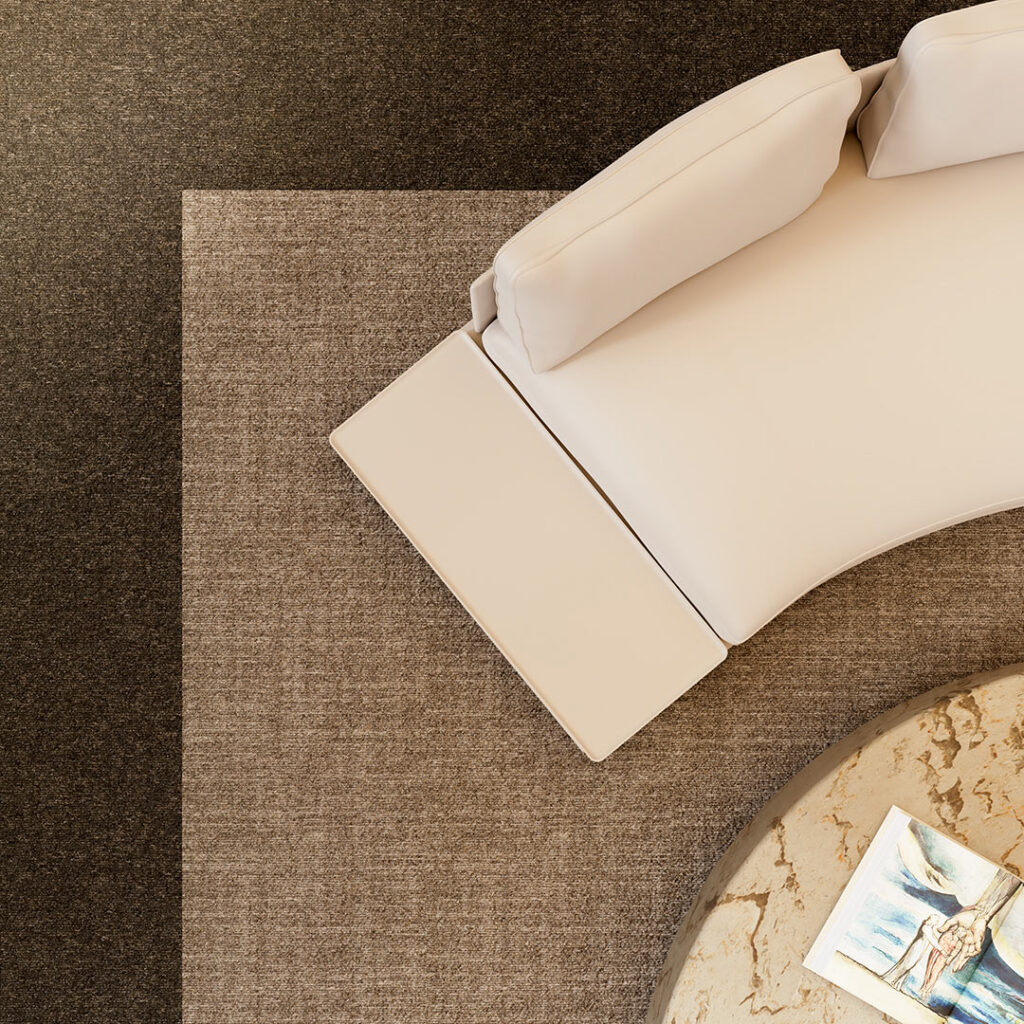
The Modulyss Limit Your Footprint program is an initiative by the Belgian carpet tile manufacturer that offers different levels of material and lifecycle responsibility to suit various projects and budgets. The program covers the entire lifecycle of textile tiles from design and production to reuse and recycling. It helps companies choose the level of material and end-of-life consideration that suits their needs without compromising on quality or aesthetics.
What does the Limit Your Footprint program mean in practice?
The Limit Your Footprint program is built on the idea that every project has its own requirements and budget. The program offers flexibility to choose the level of material and lifecycle consideration that best fits the situation. This means you can select textile tiles that meet your project’s specific material and end-of-life goals.
The program’s objective is efficient use of resources throughout the product’s entire lifecycle. It focuses on circular economy principles, which means reusing and recycling materials. In practice, this is reflected in the fact that tiles are manufactured from recycled materials and are, according to the manufacturer, designed to be recyclable at the end of their service life.
For businesses, the program provides a clear way to respond to the growing demand for solutions with defined material and lifecycle credentials. When you choose commercial flooring for your office or hotel, you can simultaneously work toward your company’s material use and waste reduction goals. The program makes these choices more accessible by offering ready-made solutions that work for both budget and material objectives.
Want to know more about our flooring solutions? Explore our services and find the right solution for your project.
How are Modulyss textile tiles manufactured?
Modulyss textile tiles are manufactured from Econyl yarn, which is made from recycled fishing nets and other nylon waste materials. This process reduces the need for new virgin nylon raw materials and gives existing materials a new life. According to the manufacturer, Econyl yarn is comparable in quality to new nylon, so the use of recycled input does not mean compromising on durability.
The tiles feature the ecoBack backing, which is standard in all Modulyss products. According to the manufacturer, this backing is designed so that it can be recycled into new products after use. The manufacturing process is described by the manufacturer as optimized for efficient resource use, including minimization of energy consumption and waste.
Modulyss holds Cradle to Cradle certification for its products. The Cradle to Cradle standard evaluates a product across several categories, including material health, material reutilization, renewable energy and carbon management, water stewardship, and social fairness. The certification relates to the product’s design and material composition as assessed under that standard’s criteria.
The durability and quality of the tiles are backed by a 15-year warranty, which is among the longest offered in the industry. This extended warranty period reflects the manufacturer’s stated confidence in the durability of their products.
Explore the Modulyss collection and find a flooring solution for your project.
Which spaces are Modulyss textile tiles best suited for?
Modulyss textile tiles are designed specifically for high-traffic commercial spaces. The carpets bring acoustic comfort and withstand daily wear. In office environments, the tiles reduce noise from footsteps and chairs, which improves workplace tranquility and concentration.
For hotels, textile tiles are well suited for both corridors and rooms. They create a high-quality and comfortable atmosphere, and their easy maintenance is an important advantage in a busy hotel environment. Replacing individual tiles when necessary is quick and cost-effective, saving both time and money.
In schools and hospitals, the acoustic properties of textile tiles are particularly important. They dampen sounds and create a calmer environment for learning or recovery. Additionally, the tiles’ easy maintenance makes them a practical choice for these spaces.
Color and pattern options are diverse, enabling an aesthetically interesting result. The collection ranges from subdued single-color classics to bolder, multi-toned options. You can also combine different colors and patterns to create a unique look that supports the space’s brand or interior design concept. Textures vary from soft luxurious surfaces to rougher, more practical alternatives.
Find suitable textile tiles for your space from the extensive color and pattern selection.
How do textile tiles fit Finnish interior design trends?
Finnish interior design currently emphasizes closeness to nature, material quality, and calming color palettes. Modulyss’s textile tile collection responds to these trends by offering natural color shades and textures. Earth-warm tones, various shades of green, and peaceful grays suit Finnish taste excellently.
Interest in materials with defined lifecycle and recycled content credentials is a growing consideration in Finnish interior design. Companies and public spaces increasingly seek flooring options where material origins and end-of-life options are clearly documented. Carpet tiles manufactured using recycled yarn input are one category of product where such documentation may be available.
Modulyss’s diverse color range and textures respond to domestic interior design needs. The collection offers both subdued options in line with Scandinavian minimalism and bolder, more expressive solutions. Finns value quality and durability, and the 15-year warranty meets these expectations.
Printed designs and customized solutions enable a unique look. You can order carpets with your own design that support the company’s visual identity or the space’s theme. This flexibility makes textile tiles an excellent choice for both new construction and renovations.
Durability and aesthetics combine in modern Finnish interior design. Textile tiles offer both: they are visually pleasing and withstand decades of use. This combination makes them a cost-effective choice in the long term.
Why choose textile tiles with recycled content instead of traditional ones?
Textile tiles manufactured using recycled yarn input, such as Econyl, reduce the demand for virgin nylon raw materials compared to products made entirely from new materials. After use, the tiles are, according to the manufacturer, designed to be returned for recycling through the manufacturer’s take-back or recycling scheme, though the availability of such schemes may vary by location.
M1 emission classification indicates that the product meets defined low-emission criteria for indoor use. This is relevant especially in public spaces where many people are present. Products meeting M1 criteria have been tested and found to comply with the emission limits set under that classification.
Flooring products with documented material and end-of-life credentials can support companies in meeting their internal reporting requirements related to material use and waste. Many companies report on their material impacts, and choosing products with verified material composition data can contribute relevant information to such reporting. This can also be part of a broader approach to communicating material choices to customers and stakeholders.
The 15-year warranty supports long service life, which reduces the frequency of replacement. Although the initial investment may be comparable to or slightly higher than some traditional materials, the long service life and low maintenance requirements are relevant factors in total cost of ownership. The 15-year warranty provides assurance regarding product durability.
Easy maintenance saves time and money in upkeep. Replacing individual tiles is quick, and there is no need to renew the entire floor surface due to wear or damage in a single area. This flexibility is especially valuable in high-traffic spaces.
Want to discuss your project and find the best flooring solutions? Contact us, and we’ll help you choose suitable textile tiles.
Choosing textile tiles is an investment in durability and design. They combine defined material credentials, longevity, and aesthetics in a way that meets today’s requirements. When you choose products manufactured with recycled yarn input, you select a flooring option where the material origins are documented. Explore our services and start planning your project together with VMC Project.