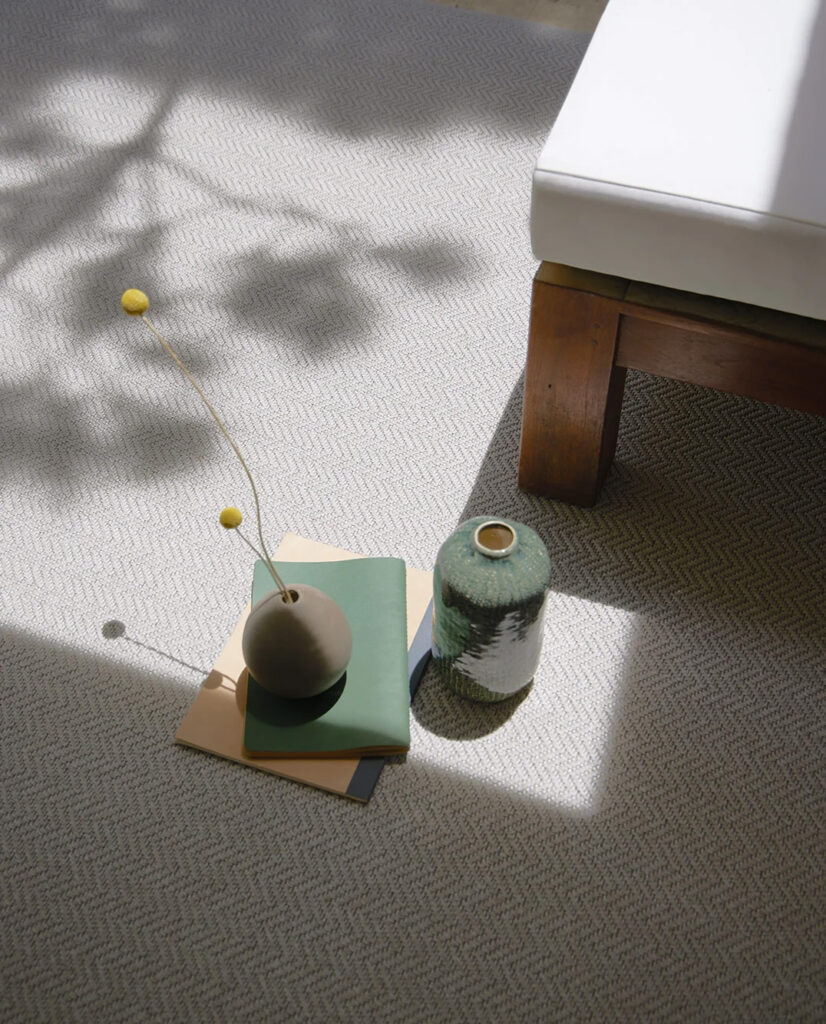
Textile carpet should be included in the concept design phase of a commercial interior project from the very beginning — not added as an afterthought on the home stretch of construction. The flooring solution has such a significant impact on a space’s acoustics, visual appearance, and brand experience that it deserves a place at the design table alongside all other surface materials. Below, we walk through the most important questions that come up when selecting textile carpets for commercial projects.
At what stage of a commercial project should flooring materials be chosen?
Flooring materials should be selected during the concept design phase, before other surface materials and furnishings have been finalized. When textile carpet is part of the design process from the outset, it can guide the entire space’s color palette, acoustic solutions, and zoning — rather than being the last detail added at the end.
In practice, this means that flooring material selection should begin at the same time as the floor plan is being drawn up and the intended uses of each area are being defined. This allows materials suited to the specific demands of each zone — such as lobbies, meeting rooms, and corridors — to be chosen accordingly.
- A carpet chosen during the concept design phase shapes the color and material decisions for the entire space
- A late-stage selection often leads to compromises in color, size, or installation scheduling
- Ordering material samples early gives designers the opportunity to compare options at their own pace
Nothing replaces having a real material sample on the design table. You can see the true color and feel the material in your hands before making a final decision. Order a material sample directly from us and we’ll send it to you for review.
What do textile carpets do for the acoustics and comfort of a commercial space?
Textile carpet improves the acoustics of a commercial space by dampening footstep noise and reducing reverberation within the room. This makes open-plan offices and meeting spaces considerably more pleasant working environments, as noise is one of the most common factors that diminishes workplace comfort.
The acoustic effect of a textile surface is based on the material’s ability to absorb sound rather than reflecting it back off hard surfaces. Thickness, fiber material, and surface structure all contribute to the sound-dampening performance. For example, Ntgrate’s textile vinyls offer a minimum of 19 dB of sound reduction, making them a practical choice for busy lobby areas and corridors.
Acoustics in open-plan offices
In open-plan offices, textile carpet functions as one component of an overall acoustic solution, working together with suspended ceilings and partition walls. Flooring alone won’t eliminate all sound issues, but it is often the most cost-effective way to simultaneously reduce both impact noise and background noise.
Comfort and warmth underfoot
Beyond acoustics, textile carpet brings a warmth and softness to a space that hard flooring materials simply cannot offer. This directly affects how a space is experienced and makes waiting areas and customer-facing spaces in particular feel far more welcoming.
How do carpet color and surface pattern support brand identity?
The color and surface pattern of a textile carpet are a tangible way to bring a company’s brand identity into the visual character of a commercial space. The floor is the single largest surface element in any room, so color and pattern choices have a powerful influence on the first impression a space creates.
Brand colors can be realized by selecting a matching shade from a standard collection, or by ordering a printed carpet onto which a designer’s original artwork or a company logo is applied directly to the carpet surface. We use the latest print technology to deliver custom designs to offices, restaurants, and hotels.
- Classic solid colors create a calm and professional foundation for the rest of the interior
- Multi-tone and textured options bring personality and visual movement to a space
- Geometric patterns and graphic weaves are well suited to modern office environments
- Printed carpets allow for a fully customized brand look in the flooring material
When choosing color and pattern, practicality is also worth considering. Darker shades and textured patterns conceal dirt more effectively than light solid surfaces — an important factor in high-traffic public spaces.
What is the difference between carpet tiles and broadloom carpet in commercial use?
A carpet tile is a modular piece, typically 50 × 50 cm, installed in the same manner as floor tiles. Broadloom carpet, by contrast, is delivered on a roll and installed as a continuous surface. Both have their own strengths, and the right choice depends on the intended use of the space, maintenance requirements, and visual objectives.
Advantages of carpet tiles in commercial spaces
Carpet tiles are particularly practical in spaces with extensive cabling or underfloor heating, since individual tiles can be lifted and replaced as needed. A worn or damaged section can be renewed by swapping out only that tile, which significantly extends the overall lifespan of the flooring solution. The modular format also allows for more creative pattern combinations and visual zoning within a space.
A great example of high-quality carpet tiles is BLOQ, whose tiles are manufactured using recycled materials and offer a wide range of colors and patterns.
Advantages of broadloom carpet in commercial spaces
Broadloom carpet gives a space a seamless, unified look that is especially well suited to meeting rooms, executive suites, and hotel rooms where a premium, polished finish is desired. Broadloom is also often easier to keep clean, as there are fewer seams where dirt can accumulate.
How do durability and environmental certifications influence material selection?
Environmental certifications are an increasingly common requirement in commercial projects. Building regulations, LEED and BREEAM rating systems, and companies’ own procurement criteria all have a concrete influence on material choices.
The most important certifications and properties to look for in commercial projects include:
- M1 emission classification means the material meets Finland’s strict indoor air quality requirements and is suitable for spaces where people spend extended periods of time
- Cradle to Cradle is a certification that assesses a product’s design for material reuse or recycling at the end of its life cycle
- BREEAM and LEED are international green building certification schemes that material choices directly affect
- Products containing recycled content such as Econyl yarn or recycled PET fiber carry specific claims about the proportion of recycled material used in the product
We carry several certified options in our range. For instance, Infloor’s carpet tiles all hold the M1 certification, and the manufacturer states that the tiles are designed to be recyclable and that the factory has been recognized by the German Ministry of the Environment for its environmental work. We recommend verifying the current scope and validity of any certification directly with the manufacturer for your specific project requirements.
Material durability in use is also a relevant factor when evaluating flooring options. A long-lasting flooring solution that does not need replacing for many years reduces the frequency of material consumption and installation over the building’s lifetime.
Who is responsible for carpet installation in a commercial project?
Textile carpet installation in a commercial project is typically carried out by a specialized installation team with expertise in both the materials and the various methods of securing them. A successful installation is just as important as choosing the right material — a poorly installed carpet wears unevenly and can create a safety hazard.
We offer installation as part of our full-service delivery. In addition to our own installation team, we have a strong network of skilled professionals who handle even the most demanding installations across Finland, on agreed timelines. This means your project won’t stall at the installation stage due to logistical issues.
- Carpet tiles can be installed on a variety of subfloors — for example, Infloor’s LiftBAC-backed tiles can be laid without adhesive
- Broadloom carpet installation requires a level, clean subfloor and the correct adhesive type
- Our in-house binding workshop and computer-controlled cutting machines ensure precise measurements before installation begins
Would you like to see the kinds of commercial solutions we have delivered? Browse our references and find inspiration in completed projects. If you have a project coming up, get in touch and tell us what you need. We’ll guide you from material selection all the way through to installation.