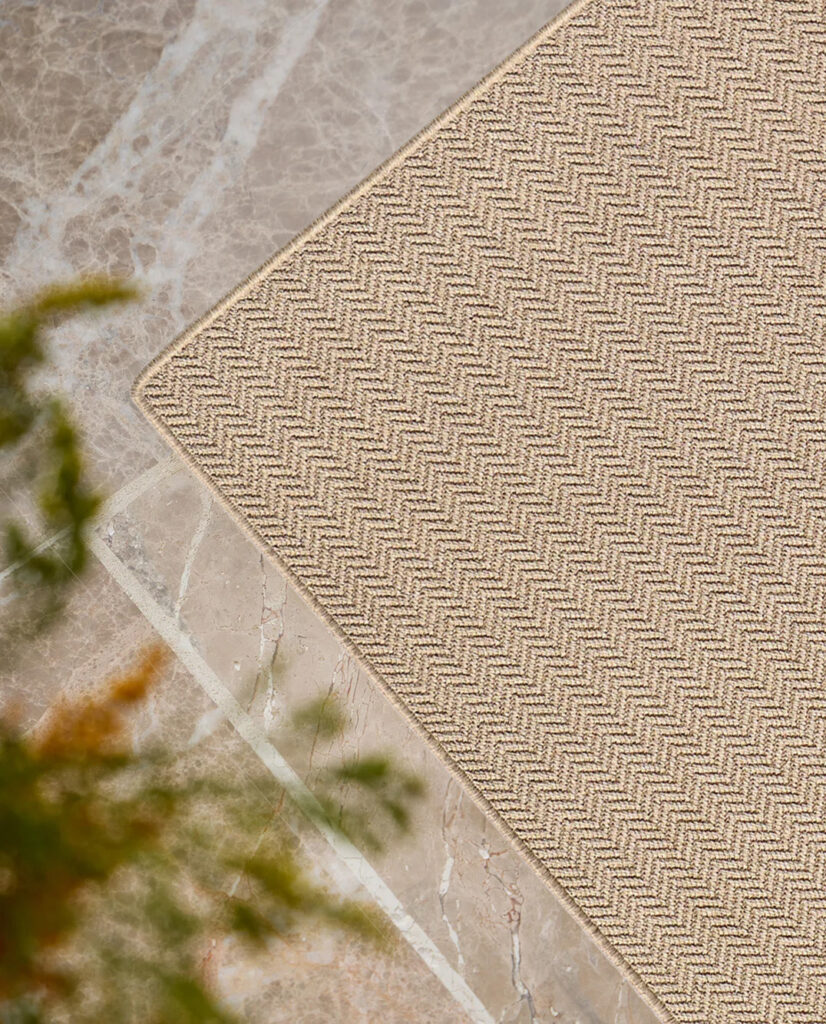
The best flooring choice for a corporate reception area is a heavy-duty textile carpet that can withstand constant foot traffic, is easy to maintain, and supports the company’s visual identity. The reception area is often the first space a visitor sees, so the flooring solution directly communicates the company’s quality and values. Below, we cover the most important questions to help you make the right choice.
What requirements does a reception area carpet need to meet?
A reception area carpet must withstand heavy use, be easy to maintain, and meet the fire safety requirements for public spaces. It should also suit the room’s acoustics and visual appearance. The reception area is a company’s calling card, so both the quality and appearance of the carpet matter.
In practice, a reception area carpet must meet several simultaneous requirements:
- Durability: Reception areas see a high volume of daily foot traffic, so the carpet must withstand repeated use without wearing out or losing its appearance quickly.
- Fire safety: Flooring materials used in public spaces must carry an appropriate fire safety classification.
- Easy maintenance: Reception areas are often cleaned daily, so the carpet must tolerate regular vacuuming and, when necessary, wet cleaning.
- Acoustics: Textile carpets absorb sound effectively, improving comfort and reducing noise in a busy reception area.
- Aesthetics: The carpet’s color, pattern, and material must support the company’s brand and create a professional first impression.
A carpet with an M1 emission classification is a good choice for indoor air quality, and many commercial carpet collections meet this requirement. It is also worth confirming that the chosen carpet is compatible with the existing subfloor structure.
Which carpet material holds up best under heavy use?
Polyamide is the most widely used and most durable carpet material for reception areas. It recovers its shape well, withstands repeated cleaning, and retains its appearance over time. Wool carpets are also durable and naturally stain-resistant, but are best suited to slightly lower-traffic areas.
Synthetic fibers for heavy-duty use
Textile carpets and carpet tiles made from polyamide are a popular choice for office and corporate reception areas. The material withstands mechanical stress, is easy to clean, and holds its color well. For example, arc edition’s polyamide carpets are designed specifically for demanding public spaces: they are fire-safe, wear-resistant, and easy to maintain.
Natural fibers combining style and durability
Wool is a natural choice when you want to combine durability with a warm atmosphere. Wool carpets are naturally flame-resistant and stain-resistant, making them well suited to prestigious reception areas. Sisal, on the other hand, is a tough and coarse natural fiber that holds up well under heavy use, but is not suitable for damp environments. Carpets made from recycled materials — such as PET fiber — are an option for companies that prioritize material efficiency; when considering such products, it is worth asking the manufacturer for specific details about the recycled content and its source.
How do carpet color and pattern affect the look of a reception area?
A carpet’s color and pattern directly influence how the reception area feels and looks to a visitor. Darker shades hide dirt more effectively and are well suited to high-traffic spaces, while lighter shades make a room feel more open. Patterns can either calm a space or bring it to life.
Practical tips for choosing color and pattern:
- Neutral and darker shades are practical for high-traffic reception areas. They do not show wear or dirt as easily as lighter surfaces.
- Multi-tone and textured carpets are forgiving in everyday use: small marks and imperfections are far less visible than on a solid-colored carpet.
- Subtle patterns add visual interest without dominating the entire interior. Geometric or textured designs are popular choices for office environments.
- The company’s brand colors can be incorporated into the carpet’s color scheme — or even applied through custom printing — to reinforce a consistent corporate identity.
The color palette should be coordinated with the rest of the interior: furniture, wall surfaces, and lighting. The true color is best assessed from a physical material sample rather than a screen.
Should you choose a loose-lay or wall-to-wall carpet for a reception area?
Both loose-lay and wall-to-wall carpets work well in reception areas, but the right choice depends on the size of the space, its intended use, and the desired look. A loose-lay rug is easy to replace and can be moved when needed, while a wall-to-wall carpet creates a seamless, polished surface across the entire floor.
Loose-lay rugs in a reception area
A bound loose-lay rug works well in a clearly defined area, such as beneath a seating group or in front of the reception desk. It adds warmth to the space and helps visually define different zones. A loose-lay rug is also practical when the layout may change or when a quick replacement is needed. These rugs are often made from the same materials as wall-to-wall carpets, so their durability is equally strong.
Wall-to-wall carpet or carpet tiles for the entire space
A wall-to-wall carpet or carpet tile covers the entire floor area and creates a uniform, professional appearance. Carpet tiles are particularly practical because a single worn or stained tile can be replaced without having to redo the entire floor. This makes carpet tiles a cost-effective choice for a busy reception area. For example, Modulyss carpet tiles come with a 15-year warranty, which speaks to their long-term durability.
Can a reception area carpet be custom-made to match a company’s brand identity?
Yes, a reception area carpet can be ordered as a fully customized solution tailored to your company’s visual identity. Using print technology, a company logo, brand colors, or a designer’s own pattern can be applied directly to the carpet surface — resulting in a high-quality finish that stands up to heavy use.
At VMC Project, we use the latest printing technology to deliver printed carpets to offices, restaurants, and hotels. A custom carpet is a powerful way to reinforce brand identity right at the entrance. A flooring solution aligned with your corporate identity signals attention to detail and creates a cohesive look that ties the entire interior together.
Customization options include:
- Carpet shape and size tailored to the dimensions of the space
- Color or color combination matched to the company’s brand palette
- A custom pattern, logo, or graphic element applied as a print
- Material selected based on the intended use and level of wear
Our in-house binders, skilled seamstresses, and computer-controlled cutting machines ensure a precise, polished end result. Browse our project references to see the kinds of custom solutions we have delivered for a wide range of commercial environments.
How should a reception area carpet be installed and maintained?
A reception area carpet can be installed by permanent adhesive bonding, with a self-adhesive backing, or as a loose-lay rug with a non-slip underlay. The right installation method depends on the carpet type and the subfloor material. Regular vacuuming and occasional wet cleaning keep the carpet looking its best and extend its lifespan.
Installation options
Carpet tiles are typically installed using releasable adhesive or a self-adhesive LiftBAC backing, which makes it easy to replace individual tiles later on. Wall-to-wall carpets are glued down or secured with edge strips. Loose-lay rugs require a non-slip underlay to ensure safety. We offer an installation service through our own team as well as an extensive network of skilled installers who carry out professional installations throughout Finland.
Daily and long-term maintenance
A reception area carpet should be vacuumed daily or several times a week, depending on foot traffic. Spot stains should be treated as quickly as possible using the appropriate cleaning products. Deeper wet cleaning is carried out as needed, typically a few times a year. One of the key advantages of carpet tiles is that a heavily worn or stained tile can simply be swapped out for a new one without replacing the entire floor — keeping long-term maintenance costs under control.
Nothing replaces the experience of feeling the right material in your hands. Order a material sample to see the true color and feel the texture for yourself before making your final decision. We will send your chosen sample directly to you to view and touch.
Would you like help choosing the right carpet solution for your reception area? Contact our specialists and we will work through your space’s needs together — finding the right solution for you, from design through to installation.